



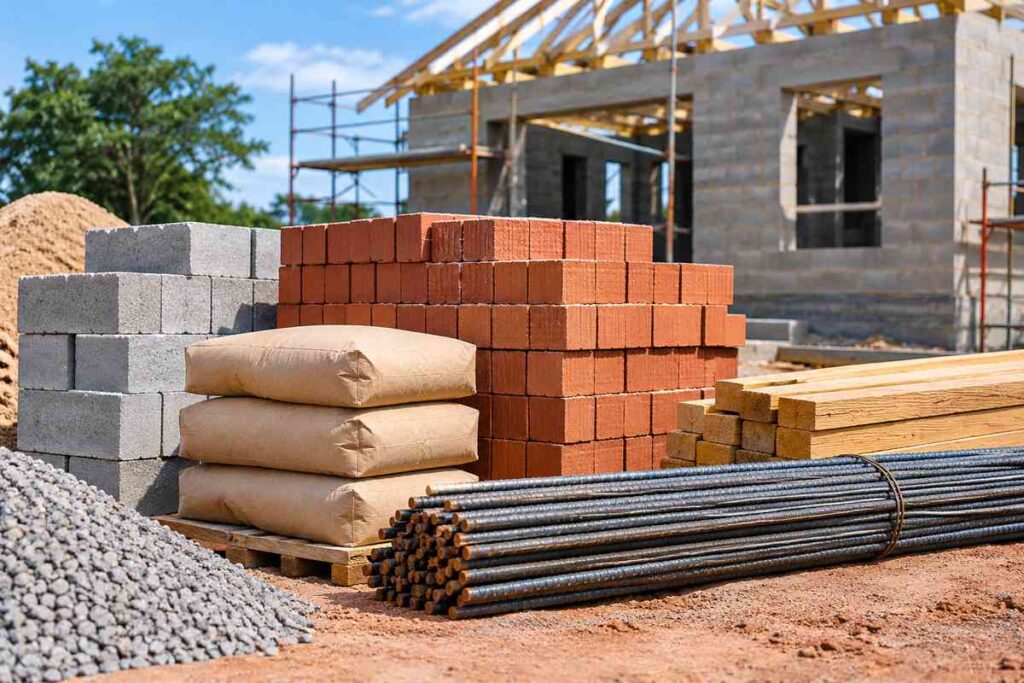
Cement needs dry storage because moisture can trigger hydration before the cement is mixed and used. Premature reaction can cause lumps and reduce the material’s ability to develop the required performance. Keeping cement dry from delivery to batching helps protect concrete, mortar and plaster quality and avoids unnecessary material waste.
What happens when cement absorbs moisture?
Cement is a reactive powder. When mixed with water under controlled conditions, it forms binding products that harden over time. Moisture entering a bag during storage can start this process prematurely. The cement may become lumpy or partly hardened. Even if some powder still appears loose, its properties may have changed. Breaking up hardened lumps does not reverse the chemical reaction.
How to store cement on a building site
- Use a dry, weatherproof storage area with protection against rain and rising damp.
- Keep bags raised above the floor on dry pallets and separated from damp walls.
- Protect bags during transport and unloading, particularly during wet weather.
- Keep different cement types separate and identifiable.
- Use older stock first, subject to the manufacturer’s storage and quality guidance.
The Concrete Society of Southern Africa cement guidance recommends raised storage and stock rotation. A tarpaulin over bags outdoors is not a reliable substitute for a properly protected store, especially where water can collect underneath.
How long can cement be stored?
There is no single safe storage period for every bag. Packaging, humidity, temperature and storage conditions influence deterioration. Coastal humidity and wet winter conditions can increase the risk of moisture ingress. Check the supplier’s stated shelf life, manufacturing or packing date and any project-specific storage limits. If the material has been stored for an extended period, obtain technical advice before using it for structural work.
Practical example: managing deliveries
A contractor expecting to use cement over several weeks should plan deliveries around the work programme rather than storing the entire quantity unnecessarily. Record delivery dates, inspect bags for damage and keep the oldest acceptable stock accessible. If a roof leak wets part of the stock, isolate the affected bags and consult the supplier. Do not blend questionable cement with fresh material to conceal deterioration.
Use our cement calculator for preliminary quantity planning and the building materials cost calculator to estimate purchasing costs. Confirm the specified cement type and quantities before ordering.
Frequently asked questions
Only with effective protection against moisture and suitable storage arrangements. A dry enclosed store is preferable, and bags must not contact wet ground.
Hard lumps may indicate premature hydration. Do not assume the cement is suitable after crushing them; obtain supplier advice and testing where necessary.
Unopened bags can still absorb moisture over time. Follow the manufacturer’s storage guidance and assess older stock before use.
Related construction questions
- What is the difference between cement and concrete?
- What is ready-mix concrete?
- What is the difference between plaster sand and building sand?
Have More Construction Questions?
Explore our South African construction knowledge hub for practical answers about building materials, costs, regulations, construction methods and more.
Browse All Construction Questions