


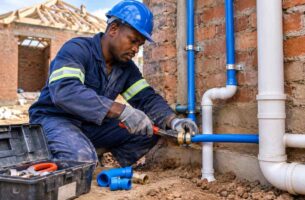
Stormwater is runoff from rainfall, while sewage contains wastewater from sanitary fixtures and other permitted sources. What to consider in practice Keep systems separate where required by municipal rules. Incorrect connections can overload sewers or contaminate waterways. Confirm the lawful discharge point with the municipality before altering drainage. Related questions What is a plumbing trap? […]
Read More
An inspection chamber provides access to underground drainage for inspection and maintenance. What to consider in practice Keep access unobstructed and use covers suitable for expected loads. Chambers allow specialists to inspect junctions and clear blockages. Never enter a chamber without specialist confined-space controls. Related questions What is a plumbing trap? Why does a drain […]
Read More
Water hammer is a pressure surge caused by a rapid change in water flow. What to consider in practice A sudden valve closure can create a pressure wave and banging noise. Check valve operation, pipe support and pressure conditions. A plumber can identify whether pressure adjustment, arrestors or other changes are appropriate. Related questions What […]
Read More
A stopcock is a valve used to isolate a water supply. What to consider in practice Know the location of your main isolation valve before an emergency. Individual fixtures may also have isolation valves. Do not force a seized valve; arrange repair so the supply can be shut off safely when needed. Related questions What […]
Read More
A backflow prevention device helps stop potentially contaminated water flowing into a clean supply. What to consider in practice Backflow can occur through reverse pressure or siphonage. Device selection depends on the contamination hazard and installation. A suitable plumber should assess the system and determine testing and maintenance requirements. Related questions What is a plumbing […]
Read More
Some discharge can occur during heating, but continuous or unusual discharge may indicate a fault. What to consider in practice Thermal expansion can cause intermittent discharge from an expansion control valve. Persistent flow or unusually hot discharge needs professional assessment. Never block a safety discharge pipe; arrange safe isolation and inspection if necessary. Related questions […]
Read More
A pressure control valve regulates incoming water pressure to suit the hot-water installation. What to consider in practice The valve must be compatible with the geyser and other safety components. Incorrect pressure ratings or installation can cause faults. Have a qualified plumber assess the complete installation rather than replacing individual safety devices by guesswork. Related […]
Read More
A plumbing vent helps balance air pressure in drainage and protect trap seals. What to consider in practice Venting allows air to enter or leave the drainage system as wastewater flows. Poor venting can contribute to gurgling or loss of trap seals. Do not cap a vent to stop odours without investigating the underlying problem. […]
Read More
A gravity drain needs a suitable slope to convey wastewater and solids. What to consider in practice The correct gradient depends on pipe diameter, flow and system design. Insufficient fall can encourage deposits, while unsuitable gradients can also impair performance. Follow the approved drainage layout and applicable installation requirements. Related questions What is a plumbing […]
Read More
A plumbing trap retains a water seal that helps prevent sewer gases entering a building. What to consider in practice Traps are commonly fitted beneath basins, sinks and other fixtures. Maintain the water seal and correct venting. Repeated odours may indicate a dry trap, blockage or ventilation fault; investigate rather than masking the smell. Related […]
Read More