


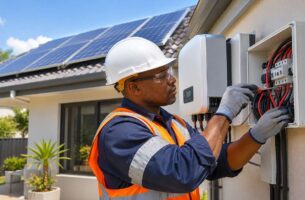
Surge protection helps limit transient overvoltages that can damage electrical equipment. What to consider in practice Protection requires coordinated devices and correct earthing. Lightning exposure and supply conditions influence the design. A surge protective device cannot guarantee protection from every lightning event; consult a registered electrical contractor about the appropriate system. Related questions What is […]
Read More
A solar panel string is a group of modules connected in series to provide a combined DC voltage. What to consider in practice String design must respect inverter voltage and current limits under expected temperatures. South African sites can experience substantial temperature variation, affecting module voltage. DC circuits remain hazardous in sunlight and require competent […]
Read More
A circuit breaker may trip because of overload, short circuit or another fault, depending on the device. What to consider in practice An overloaded circuit may have too many high-power appliances connected. A fault can also cause immediate tripping. Do not repeatedly reset a breaker without identifying the cause; disconnect affected appliances if safe and […]
Read More
Earthing connects designated conductive parts to the earthing system to support fault protection. What to consider in practice Correct bonding and protective device coordination are essential. A registered electrical contractor should assess and test the installation in accordance with applicable South African requirements. Earthing does not make live conductors safe to touch. Related questions What […]
Read More
Kilowatts measure power, while kilowatt-hours measure energy over time. What to consider in practice A 2 kW appliance operating for three hours uses approximately 6 kWh. South African electricity bills generally measure consumption in kWh. For solar backup, distinguish the inverter’s power rating from the battery’s usable energy capacity. Related questions What is an earth […]
Read More
Usable capacity is the energy available within the battery’s permitted operating limits. What to consider in practice Compare usable kilowatt-hours rather than nominal capacity alone. Temperature, ageing and inverter losses affect delivered energy. For backup planning, calculate essential loads and their operating hours before choosing equipment. Related questions What is an earth leakage device? What […]
Read More
A solar inverter converts DC electricity into AC electricity suitable for compatible loads or grid connection. What to consider in practice Select equipment for system voltage, power, protection and applicable municipal or electricity distributor connection requirements. Backup capability varies by model; not every grid-connected inverter supplies power during outages. Related questions What is an earth […]
Read More
AC periodically reverses direction, while DC flows with a consistent polarity. What to consider in practice South African household mains supply is AC, while solar modules and batteries typically supply DC. Inverters convert power for compatible AC loads. Both forms can be hazardous and require appropriate protection. Related questions What is an earth leakage device? […]
Read More
A distribution board distributes electrical supply to circuits and houses protective devices. What to consider in practice Circuit identification, ratings and protection must suit the installation. Keep the board accessible and have alterations performed by a registered electrical contractor; never work inside a live board. Related questions What is an earth leakage device? What is […]
Read More
An earth leakage device detects certain current imbalances and disconnects a circuit to reduce electric shock risk. What to consider in practice It does not replace earthing or overcurrent protection. In South African homes, have a registered electrical contractor investigate repeated tripping rather than bypassing protection. Related questions What is an electrical distribution board? What […]
Read More