



Brownfield redevelopment in the UK: from site investigation to construction
Investigating previously developed land
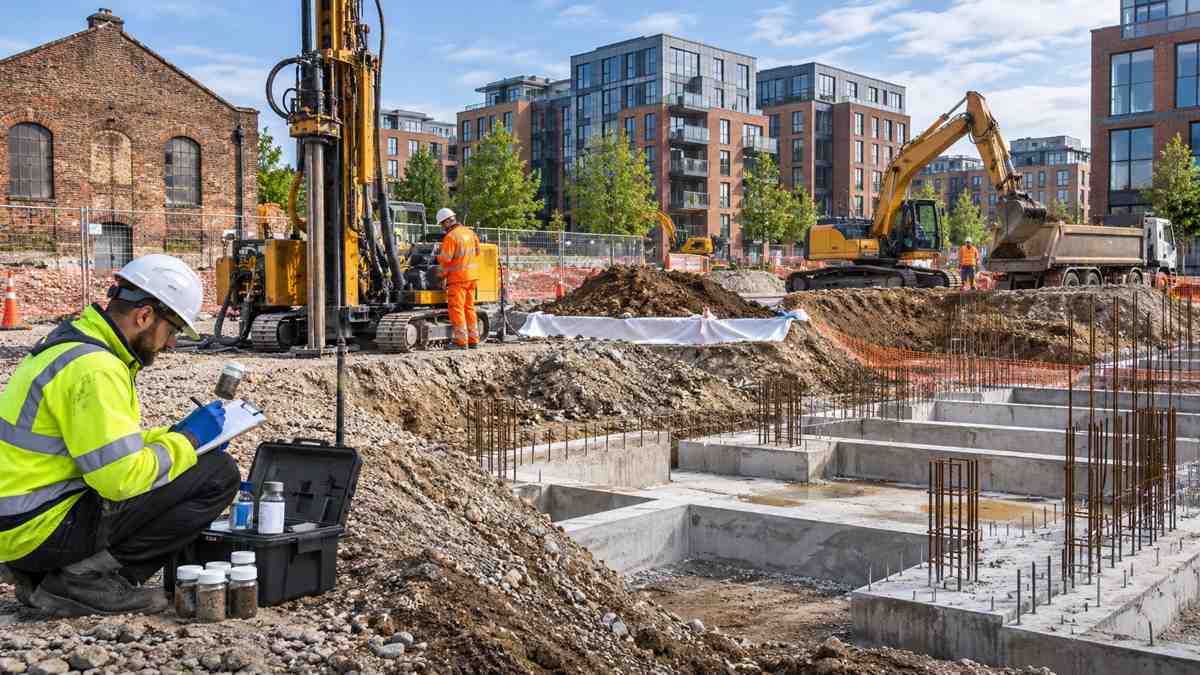
Former factories, railway yards and industrial estates can provide valuable land for housing and commercial development. But a vacant plot is not necessarily ready for construction. Historic maps, previous land uses, buried services and former tanks need to be reviewed before a design is finalised. A site investigation can then establish ground conditions and identify potential contamination pathways.
Remediation and design
Environmental specialists develop a risk-based plan for the intended use. Options may include treatment, removal of affected material or engineered barriers, depending on the site. Foundations, drainage and utility trenches must be coordinated with that plan. In England, the planning authority and relevant environmental regulators may require evidence of satisfactory remediation. Requirements differ across the devolved nations.
Managing the construction programme
Allow for unexpected buried structures, laboratory turnaround times and waste classification in the programme. Contractors should agree procedures for unexpected contamination and maintain records of material movements. Verification evidence should be collected as work progresses rather than reconstructed at handover.
For background, see the UK government guidance on land remediation.
Understanding the commercial risks before purchasing land
A developer comparing two plots should consider the total cost of bringing each into productive use, rather than the purchase price alone. A former industrial site may have good transport connections but require substantial demolition, utility diversion or ground improvement. Establish who will carry the cost of dealing with unexpected conditions and whether the proposed development remains viable if remediation takes longer than planned.
The Environment Agency’s risk assessment guidance describes how specialists examine the relationship between contaminants, exposure routes and people or environmental features that could be affected. This approach helps distinguish a potential hazard from an actual risk for the proposed development. Read the land contamination risk assessment guidance.
Coordinating earthworks and infrastructure
Temporary haul roads, stockpile locations and drainage arrangements should be considered alongside the permanent design. For example, the location of a future landscaped courtyard may influence the requirements for imported soil and protective layers. Where existing structures are retained, survey information should establish whether their foundations can accommodate the intended changes. Reuse can reduce demolition waste but requires evidence of structural suitability.
What should developers receive at handover?
The project team should assemble inspection records, laboratory results, relevant waste documentation and drawings showing any protective measures that remain in place. Future maintenance teams need to know where restrictions apply before excavating for new utilities or landscaping. A clear handover makes the redevelopment easier to manage throughout its operating life.
Brownfield regeneration can reconnect neglected land with established communities. Its success depends on early investigation, realistic budgets and a construction strategy that integrates environmental and engineering requirements.
Explore more construction resources
Visit our United Kingdom construction hub, explore international construction or browse Construction South Africa.
