



Metro rail construction in India: how urban corridors are built
Choosing the alignment
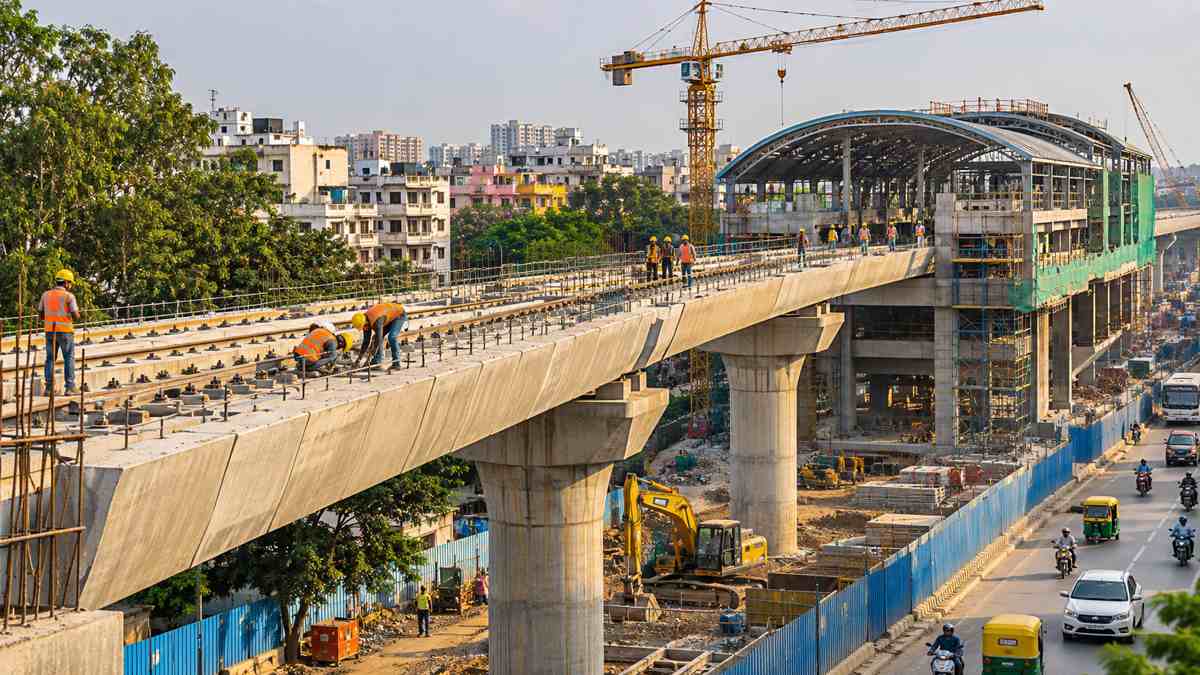
Metro rail construction in Indian cities involves balancing passenger demand with crowded roads, existing buildings and underground utilities. Elevated viaducts can reduce excavation, while tunnels may be preferable where surface space is restricted. Station locations influence land requirements, pedestrian connections and construction access.
Building viaducts and tunnels
Elevated corridors often use precast concrete segments manufactured away from busy roads and erected using specialist lifting systems. Underground works may involve tunnel boring machines and cut-and-cover station boxes. Groundwater, settlement and adjacent foundations require project-specific assessment. Monitoring and traffic management must be planned before work starts.
From civil works to railway systems
Track installation, traction power, signalling, ventilation and station services require coordinated interfaces. Civil contractors must provide accurate openings, equipment supports and access routes for systems teams. Testing and commissioning are separate milestones, not simply the end of structural construction.
Explore the Delhi Metro Rail Corporation for operator and project information.
Moving construction through a working city
Unlike a new railway across undeveloped land, a metro corridor must coexist with daily travel, businesses and public services. Contractors need to maintain appropriate pedestrian access, coordinate temporary road diversions and communicate changing work areas. Utility owners should be involved early because inaccurate service records can delay excavation and disrupt surrounding neighbourhoods.
Precast production and quality assurance
A dedicated precasting yard enables repeated components to be manufactured while foundation work continues elsewhere. Production teams need approved drawings, controlled material supply, curing records and dimensional inspections. The site programme should correspond with the rate of production and the available storage space. Delivering components too early can create unnecessary handling, while late deliveries can leave expensive erection resources idle.
Designing stations around passengers
Station construction includes much more than platforms and ticket halls. Designers must coordinate accessible routes, passenger circulation, emergency exits and equipment rooms. Connections with buses, pedestrian networks and other transport services can influence how effectively the completed railway serves its surrounding area. Maintenance access also matters because equipment will need to be inspected and replaced throughout the station’s life.
Skills required on metro projects
Metro construction creates work for civil engineers, surveyors, geotechnical specialists, electrical technicians, planners and safety professionals. Digital models can assist coordination between disciplines, but accurate site records and disciplined communication remain essential. Engineers entering this field benefit from understanding both infrastructure delivery and the requirements of railway operations.
Each Indian metro project has its own procurement arrangements and technical specifications. Contractors should consult the responsible metro authority rather than assuming that requirements from another city apply.
Independent inspections and documented acceptance criteria also help teams resolve construction defects before passenger services begin.
Explore more construction resources
Visit our India construction hub, explore international construction or browse Construction South Africa.
