



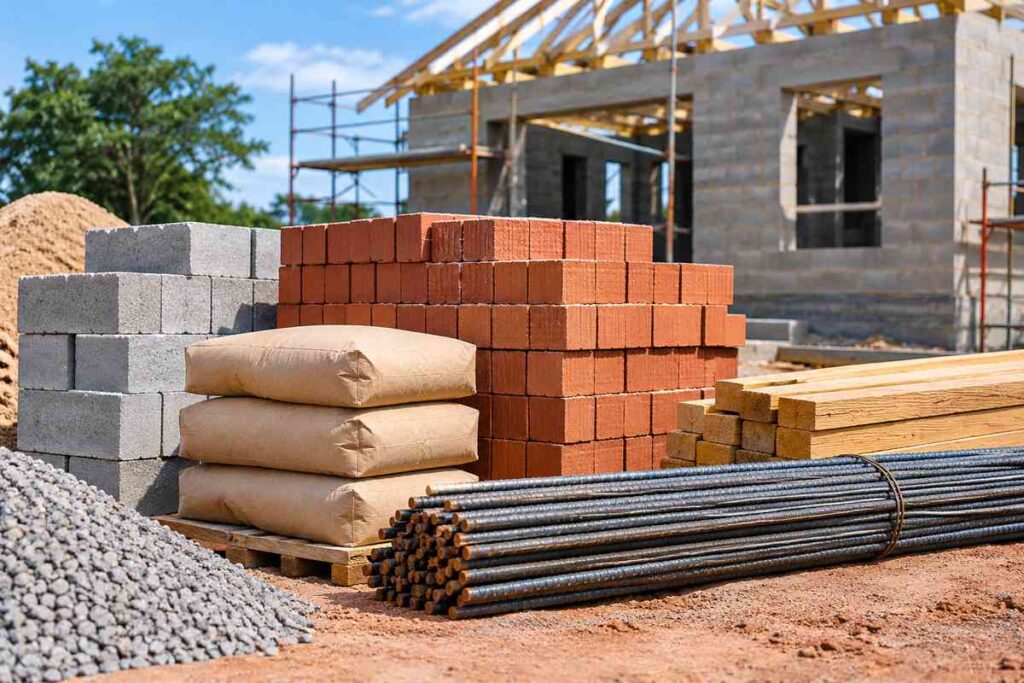
Clay bricks are shaped from clay and fired in a kiln, while concrete bricks are formed from cementitious mixtures and hardened through curing. Both can be used for masonry when the units and wall design meet the project requirements. The better choice depends on strength, exposure, dimensions, finish and total installed cost.
How the materials are manufactured
Clay masonry units are formed, dried and fired to develop their ceramic properties. Different clay sources and manufacturing processes produce a range of colours, textures and performance characteristics. Concrete units are made from cementitious binder, aggregates and water, often compacted in moulds before curing. They can be manufactured in various shapes, sizes and finishes.
Comparing strength and durability
Neither material is automatically stronger. Compare the declared compressive strength and suitability of the particular unit with the structural design. A load-bearing wall needs an appropriate combination of masonry units, mortar, wall thickness, restraint and detailing. A high unit strength alone does not establish the strength of the completed wall.
For exposed walls, check weather resistance and water absorption as well as the intended finish. Some clay bricks are specifically manufactured for exposed facework; others require plaster. Concrete masonry can also be supplied for exposed or coated applications.
Moisture movement and wall detailing
Clay and concrete masonry can respond differently to changes in moisture and temperature. Fired clay units may undergo long-term moisture expansion, while concrete masonry can experience drying shrinkage. Appropriate movement joints, connections and detailing help accommodate these effects. Mixing materials in the same wall without considering movement can contribute to cracking.
Which brick is more economical?
Compare the delivered cost per square metre of completed wall rather than the price per brick. Unit dimensions determine how many are needed, and labour, mortar, wastage and finishing can change the final cost. For example, a face-brick wall may avoid some plastering and painting costs, whereas a plastered wall may allow a less expensive masonry unit.
Use our brick quantity guide with actual unit dimensions and joint thickness. Confirm the wall specification before ordering.
South African technical guidance
The Clay Brick Association technical resources cover clay masonry properties and detailing. The Concrete Manufacturers Association masonry publications provide guidance on concrete units. Confirm current applicable standards with the supplier and designer, particularly for structural and exposed masonry.
Frequently asked questions
Yes, when the units and completed wall meet the structural specification. Not every concrete brick is suitable for every load-bearing application.
No. Water can penetrate masonry through units, joints and defects. Exposure-appropriate detailing and moisture management remain necessary.
Only with suitable design and detailing. Different movement characteristics need to be considered to reduce cracking.
Related construction questions
- What is the difference between plaster sand and building sand?
- What is the difference between cement and concrete?
- What is aggregate in concrete?
Have More Construction Questions?
Explore our South African construction knowledge hub for practical answers about building materials, costs, regulations, construction methods and more.
Browse All Construction Questions