



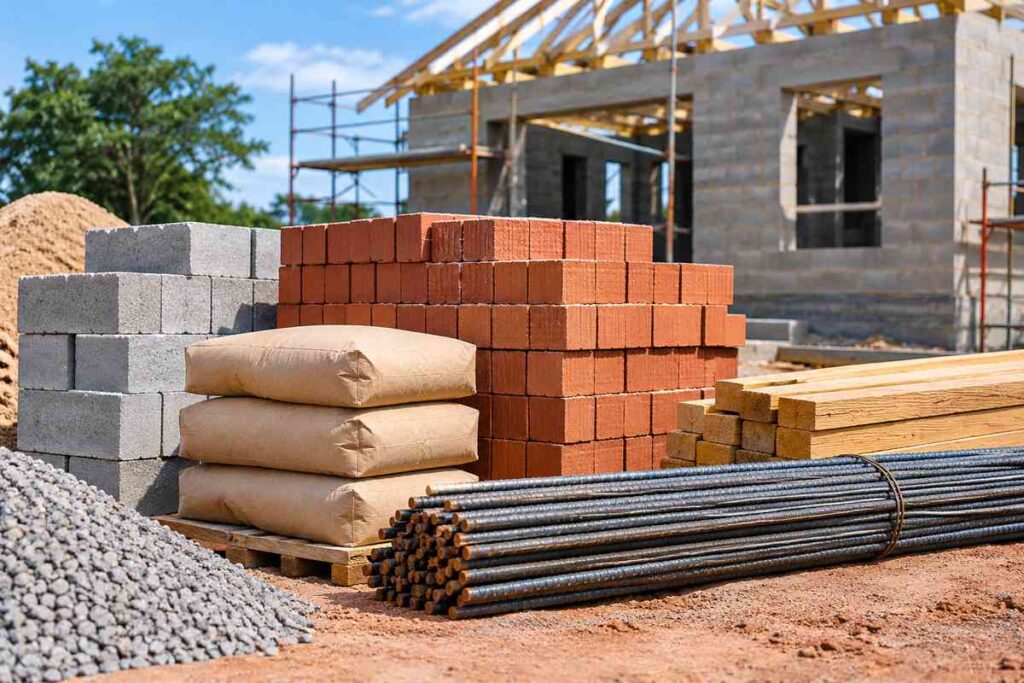
Reinforcing steel is embedded in concrete to carry tensile forces, help control cracking and resist other forces specified by the structural design. Concrete performs well in compression but has relatively low tensile strength. Steel bars or welded mesh allow the two materials to work together in foundations, slabs, beams, columns and retaining structures.
How reinforced concrete works
When a beam bends under load, part of its section is compressed and another part tends to stretch. Reinforcement placed in the appropriate tension zone carries tensile forces after concrete cracks. Bond between the steel and concrete transfers forces along the bars. Deformed bars have ribs that help develop this bond. The designer determines the reinforcement layout, including where bars must extend or be anchored.
Types of reinforcement
Individual reinforcing bars are used where specific sizes, shapes and positions are required. Welded steel mesh provides a grid of wires and is often specified in slabs and other suitable elements. Links or stirrups can contribute to shear resistance and confinement. Each type has a different function, and mesh cannot automatically replace bars of an apparently similar weight.
Why concrete cover matters
Cover is the distance between the outer concrete surface and the nearest reinforcement. Adequate cover helps protect steel from corrosion and fire and allows the designed bond to develop. The required value depends on exposure, member type and design requirements. Use suitable spacers and supports to maintain the specified position during placement; do not rest reinforcement directly on soil or formwork.
Practical example: checking a foundation before pouring
Before placing concrete in a reinforced foundation, compare the installed steel with the approved drawings. Check bar diameters, spacing, bends, laps, anchorage and cover. Confirm that the reinforcement is secure and that concrete can flow around it. Arrange the required inspection before pouring because correcting concealed steel afterwards can be difficult and costly.
South African projects should follow the applicable structural specification and current standards. The AfriSam technical reference guide provides background on concrete materials and production. Use our concrete calculator for volume estimates, not reinforcement design.
Frequently asked questions
No. Reinforcement can control crack widths and carry forces across cracks, but concrete can still crack due to loading, shrinkage or temperature changes.
Light surface rust may be acceptable under the project specification, but loose scale, contamination or significant section loss requires assessment. Ask the responsible engineer before using questionable steel.
Not without the structural designer’s approval. Spacing, size, anchorage and position are part of the design and affect performance.
Related construction questions
Have More Construction Questions?
Explore our South African construction knowledge hub for practical answers about building materials, costs, regulations, construction methods and more.
Browse All Construction Questions