



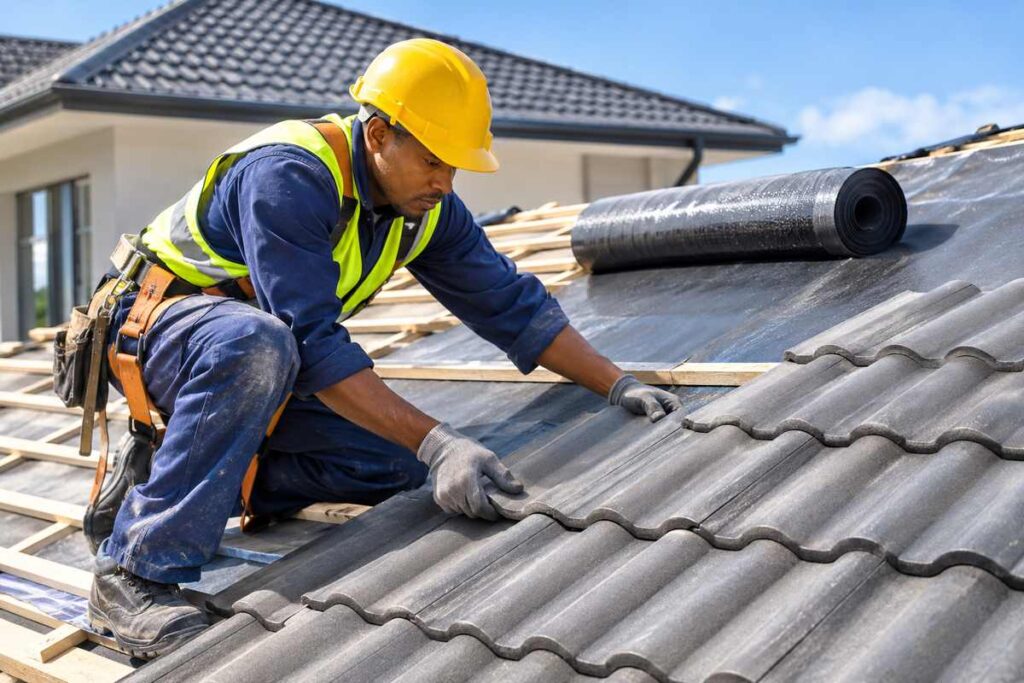
A waterproofing membrane is a continuous barrier designed to prevent water from penetrating a building assembly. Membranes are used on roofs, balconies, wet areas and other locations where water must be controlled. Their performance depends on selecting a suitable complete system and installing it correctly, especially at joints and penetrations.
Sheet versus liquid-applied membranes
Sheet membranes are manufactured in rolls or panels and joined using the system’s specified bonding, welding or overlapping method. Bituminous and synthetic sheet systems are common examples. Liquid-applied membranes form a continuous layer after application and curing, sometimes with reinforcing fabric. Different products have different requirements for thickness, substrate moisture, weather conditions and protection. Neither type is automatically superior for every roof.
Choosing the right waterproofing system
Consider whether the substrate is concrete, timber, metal or another approved material. Check expected movement, ultraviolet exposure, drainage, foot traffic and compatibility with existing coatings. A membrane designed beneath tiles may not be suitable for permanent exposure to sunlight. A roof intended for regular access may require a separate protective finish. Follow the manufacturer’s complete system specification rather than combining unrelated primers, adhesives and membranes.
Why preparation and detailing matter
The substrate must meet the specified requirements for strength, cleanliness, moisture and surface condition. Cracks, joints and changes in material may need special treatment. Outlets, parapet upstands, pipe penetrations and terminations are critical because water can bypass an otherwise sound membrane at these points. Application thickness, sheet laps and curing conditions must be checked according to the product instructions.
Practical example: estimating membrane quantities
A rectangular roof measures 8 m by 6 m, giving 48 m² of horizontal surface area. If the specified system also covers a total of 8 m² of upstands, the preliminary coverage is 56 m² before laps, detailing and waste. A liquid system must be ordered using the specified consumption rate and required coats, not simply the area of one coat. These quantities are illustrative and do not specify a particular product.
Use the area calculator and materials cost calculator for budgeting. Consult the SABS and the selected manufacturer’s technical data sheets, and find waterproofing contractors for assessment. Torch-applied systems involve fire hazards and require trained installers and appropriate controls.
Frequently asked questions
No. Check whether the product is specified as a complete waterproofing system for the intended exposure.
Only if the particular system permits it and its substrate requirements are satisfied.
No. Drainage and waterproofing must be designed together.
Related construction questions
Have More Construction Questions?
Explore our South African construction knowledge hub for practical answers about building materials, costs, regulations, construction methods and more.
Browse All Construction Questions