



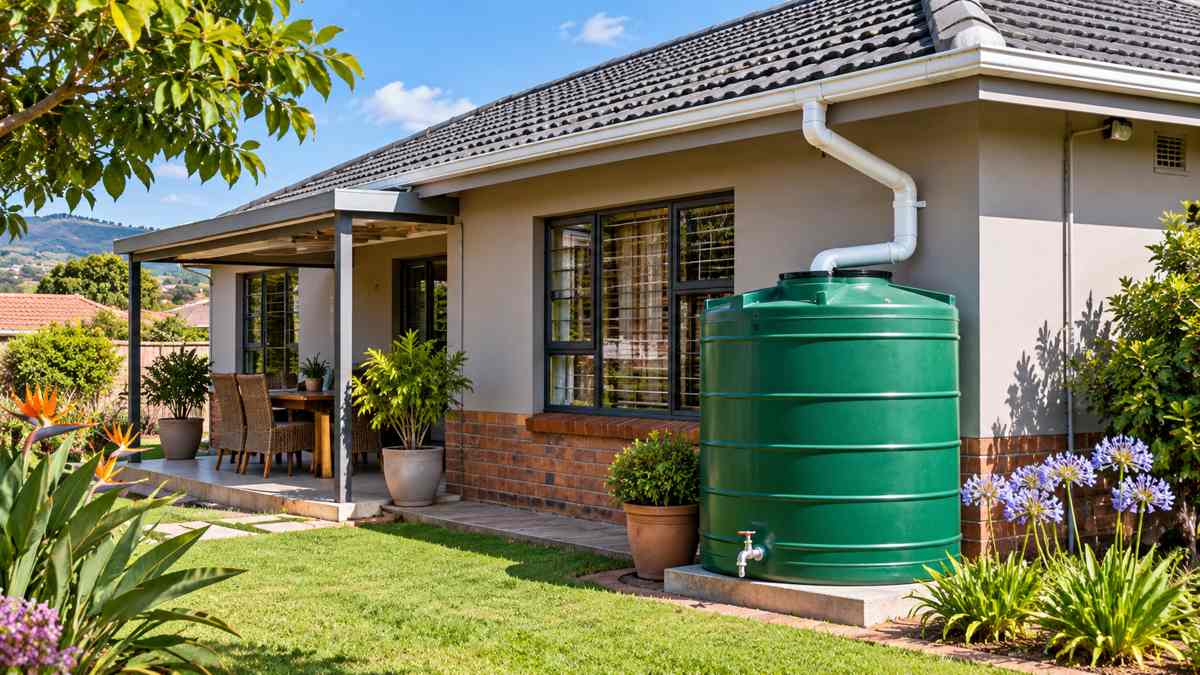
Rainwater harvesting can supplement household water supplies for gardening and suitable non-potable uses. Before buying a tank, estimate how much water your roof can collect and how much you expect to use.
Rainwater harvesting formula
Potential collection (litres) = roof catchment area (m²) × rainfall (mm) × collection efficiency. One millimetre of rain on one square metre represents one litre before losses. Use the horizontal projected roof area draining into the selected gutters.
Worked example
A 120 m² roof receiving 50 mm of rain with an illustrative efficiency of 0.8 could collect 120 × 50 × 0.8 = 4,800 litres. Actual efficiency depends on roof material, gutter design and losses from initial runoff and overflow.
Choosing tank capacity
Monthly collection is not the same as required storage. Compare local rainfall patterns with daily demand. Using 100 litres per day for irrigation requires 3,000 litres for 30 days without replenishment. A 5,000-litre tank can overflow during storms and run empty during dry spells.
Plan for a stable foundation, screened inlets, accessible filters and safe overflow drainage. A full 5,000-litre tank contains approximately five tonnes of water. Prevent cross-connections with drinking water supplies and check municipal requirements. Untreated harvested water should not be assumed safe to drink.
Find building suppliers, installation contractors and more construction guides.
Reference: City of Cape Town alternative water installation guidelines.
