



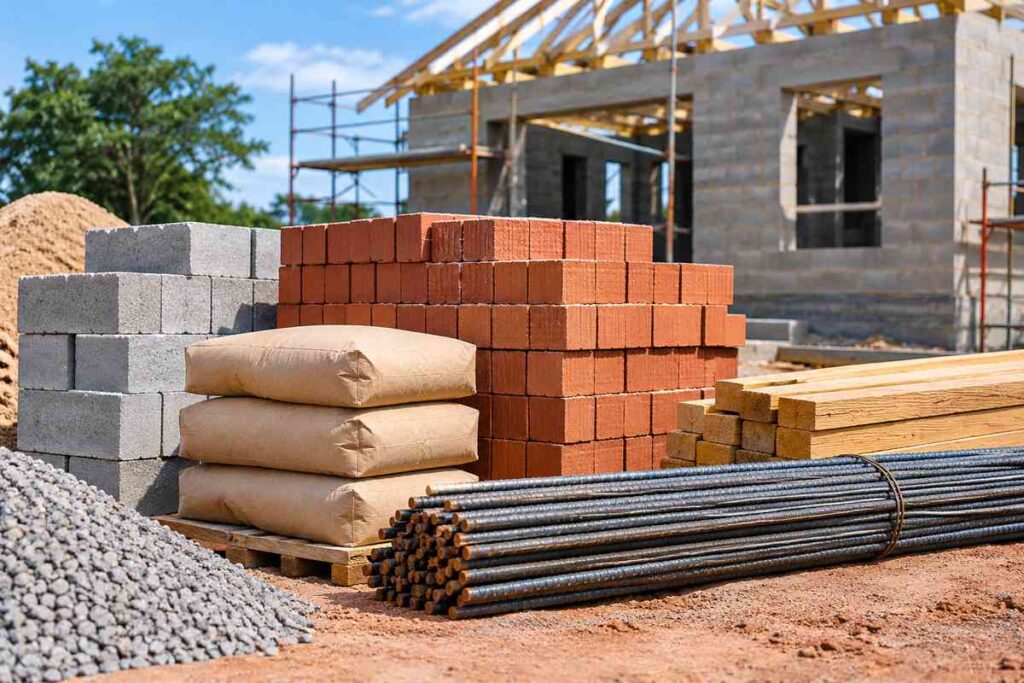
Plaster sand is selected to produce a workable plaster with a suitable surface finish, while building sand is selected for masonry mortar. The difference is mainly particle grading, shape and cleanliness rather than colour. Supplier names vary across South Africa, so check the intended application and product specification before ordering.
What is plaster sand?
Plaster sand generally has a grading suited to spreading and finishing a thin layer of cement-based plaster. A suitable blend of particle sizes helps the fresh material hold together and reduces the effort needed to achieve an even finish. Excessively coarse particles can leave drag marks, while excessive fine material may increase water demand and shrinkage.
What is building sand?
Building sand is commonly sold for bricklaying and blockwork mortar. It must allow the mason to spread a stable bed, position units and fill joints. The sand needs an appropriate balance of particle sizes and acceptable levels of contaminants. A sand that feels soft is not necessarily suitable: clay and organic impurities can affect performance.
How do the two sands compare?
| Factor | Plaster sand | Building sand |
|---|---|---|
| Primary use | Wall plaster | Masonry mortar |
| Selection priority | Finish and workability | Joint workability and mortar performance |
| Quality checks | Grading and contaminants | Grading and contaminants |
Neither label guarantees a particular sieve grading. Some sands may be suitable for both applications if tested and specified accordingly. Concrete sand is another product category and should not be replaced with masonry sand without checking the concrete mix requirements.
Choosing sand for a South African building project
Ask suppliers whether the sand is washed or screened, what grading information is available and whether it is recommended for your application. Inspect deliveries for vegetation, excessive clay, foreign material and inconsistent texture. Avoid collecting unapproved sand from beaches or riverbeds: salts, contamination and environmental restrictions can create problems.
For example, a contractor building and plastering a garden wall may order separate sand loads to achieve reliable mortar joints and a consistent plaster finish. Store them separately on a clean surface to avoid mixing with soil. Allow for moisture when measuring quantities by volume because damp sand can bulk.
See the Clay Brick Association building guidance for masonry and plaster applications. Compare local building material suppliers and use the materials cost calculator for budgeting.
Frequently asked questions
Only if its grading, cleanliness and performance suit the specified plaster. Test the finish and consult the supplier rather than relying on the product name.
Washing can remove unwanted fines and contaminants, but the finished grading must still suit the intended mix.
No. Colour reflects mineral composition and sometimes impurities. Grading, cleanliness and suitability are more reliable selection criteria.
Related construction questions
- What is aggregate in concrete?
- What is the difference between clay bricks and concrete bricks?
- What is the difference between cement and concrete?
Have More Construction Questions?
Explore our South African construction knowledge hub for practical answers about building materials, costs, regulations, construction methods and more.
Browse All Construction Questions