



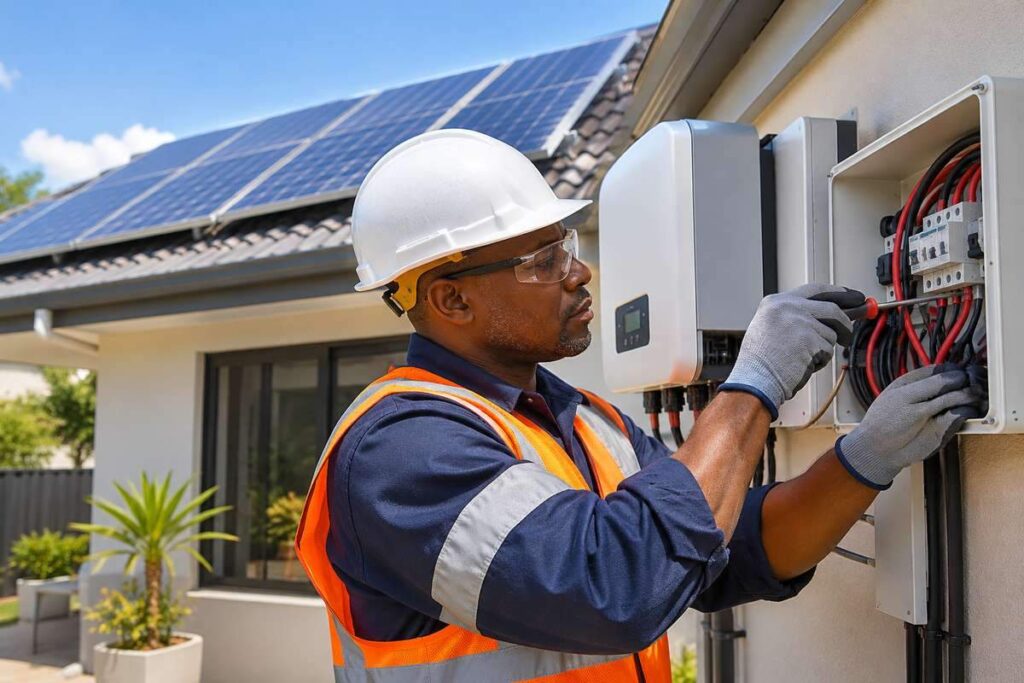
A industrial electrician maintains electrical installations and production equipment in factories, plants and industrial buildings. This South African career guide explains the work, training routes and opportunities for progression. It is intended for career research rather than advertising current vacancies.
What does a industrial electrician do?
A cement plant loses power to a conveyor motor. The electrician works with production staff to isolate the equipment, interpret circuit drawings and investigate the fault before authorised restoration.
Practical responsibilities
- Inspect switchgear and motor circuits.
- Diagnose faults using appropriate test equipment.
- Install or maintain cables and controls within scope.
- Document repairs and test results.
The exact responsibilities depend on the employer, project and equipment involved. Workers should understand their assigned scope, follow approved instructions and report discrepancies before proceeding. Good coordination with other trades helps prevent delays, damage and unnecessary rework.
Qualifications and training in South Africa
An electrical occupational qualification, apprenticeship and trade test are common artisan routes. Electrical installation work and certification require the applicable registration and competence under South African electrical regulations.
Before enrolling, confirm the training provider’s accreditation where applicable, entry requirements, assessment arrangements and whether workplace experience is included. Ask prospective employers which qualifications they recognise. Keep copies of training records, assessments and evidence of supervised work so that you can demonstrate your competence when applying for more advanced positions.
Skills employers look for
Important skills include motor control, electrical drawings, fault diagnosis and safe isolation. Employers also value reliability, accurate communication and the ability to identify problems before they affect a project. Understanding technical instructions and maintaining clear records can help workers contribute to consistent quality and safer working practices.
Where can you work?
Potential employers include manufacturing plants, industrial contractors and construction materials producers. Employment may be permanent, project-based or involve travel between sites. Explore the construction contractors directory to discover businesses in the sector. For current vacancies, consult employer recruitment websites and reputable recruitment services directly.
Career progression
A possible progression pathway is apprentice, qualified artisan, maintenance specialist or electrical supervisor. Advancement depends on demonstrated competence, relevant qualifications, available opportunities and the responsibilities required by the employer.
Practical advice for entering the occupation
Industrial work often involves three-phase equipment, motor starters and automated systems. Learn to distinguish a control fault from a power supply fault and never assume that a stopped machine is electrically isolated.
When preparing a CV, describe the actual projects, equipment or systems you have worked with and distinguish supervised experience from independent responsibilities. Include relevant qualifications and references where available. Ask employers about structured workplace learning and the opportunities to develop specialist skills rather than assuming that a short course alone guarantees employment.
Frequently asked questions
Can an industrial electrician issue a CoC?
Only an appropriately registered person acting within their authorised scope.
Is industrial work different from domestic wiring?
Yes, industrial systems often involve machinery, controls and higher power demands.
Is a trade test useful?
Yes, it is a recognised artisan qualification route.
Can electricians specialise in automation?
Yes, with further controls and instrumentation training.
Related construction careers
Explore our guides to electrician and millwright, or return to the construction careers hub to discover other occupations.
