



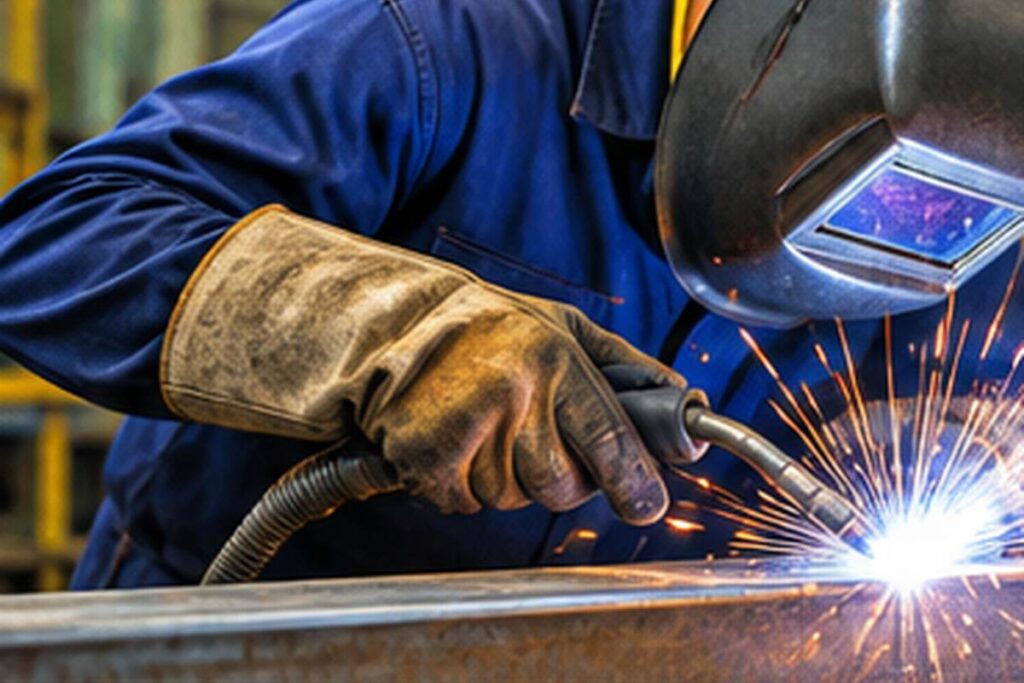
Apprentice Welder careers form part of South Africa’s construction and infrastructure sector. The role develops welding skills through formal training and supervised practical work. This guide explains entry routes, responsibilities and career development rather than advertising live vacancies.
What does this role involve?
An apprentice in a fabrication workshop prepares approved practice pieces and observes a qualified welder completing a specified joint. The apprentice learns to recognise weld defects and follow approved procedures.
Responsibilities and daily work
- Attend welding occupational training.
- Prepare assigned materials and joints.
- Practise approved welding processes under supervision.
- Record learning and inspection feedback.
Daily priorities depend on the project stage and the employer’s assigned scope. At the beginning of an assignment, confirm the required information, available resources and reporting arrangements. Keep a clear record of completed activities and outstanding matters so that the next person responsible for the work can act on reliable information.
Qualifications and training in South Africa
Investigate QCTO-recognised welding occupational qualifications and accredited training with suitable workplace experience. Complete required learning and applicable trade test or external assessment. Project-specific welder qualification tests may be required separately for particular processes and materials.
Before selecting a course, check its entry requirements, recognition where applicable and opportunities for supervised practical learning. Ask employers what evidence of competence they expect from applicants. Keep training records and examples of work completed under supervision. Academic qualifications and short courses do not automatically authorise regulated professional or specialist activities.
Skills employers value
Important skills include metal preparation, welding fundamentals, drawing interpretation and safety awareness. Reliability and clear communication are also valuable, particularly when several teams depend on the same information or work area. Develop the ability to recognise incomplete instructions and ask the responsible person for clarification. Accurate records and consistent checking help prevent avoidable delays and misunderstandings.
Employment opportunities
Potential employers include fabrication workshops, steel contractors and industrial maintenance firms. Positions may be permanent or project-based, and some require travel or work at remote sites. Explore the construction contractors directory to learn about businesses in the sector. For current vacancies, consult employer recruitment pages and reputable recruitment services directly.
Career progression
A possible pathway is apprentice, qualified welder, specialist welder or welding supervisor. Progress depends on experience, demonstrated competence and available opportunities. Seek supervised assignments that broaden your understanding of the occupation, and verify any additional qualifications or professional registration needed for more advanced responsibilities. Maintain evidence of your development for future applications.
Practical career advice
Apprentice welding differs from production welding by a qualified and appropriately tested welder. Learn to distinguish trade qualification from project-specific welding procedure and performance requirements. Keep records of processes practised and inspection feedback. Hot work, fumes, fire risks and confined spaces require approved controls; never treat a practice weld as authorisation for critical production work.
When preparing a CV, identify the types of projects, systems or equipment you have worked with. Explain your actual responsibilities and distinguish supervised work from independent decisions. Include relevant training and references where available. Ask prospective employers about mentoring, workplace learning and the scope of the position before accepting an offer.
Frequently asked questions
Does a trade qualification cover every welding process?
No, additional process-specific qualifications may apply.
Is workplace practice necessary?
Yes, it develops practical competence.
Can apprentices weld pressure vessels independently?
No, specialist requirements and supervision apply.
Is inspection knowledge useful?
Yes, it helps identify defects.
Related construction careers
Explore our guides to welder and welding inspector, or return to the construction careers hub for other occupations.
