


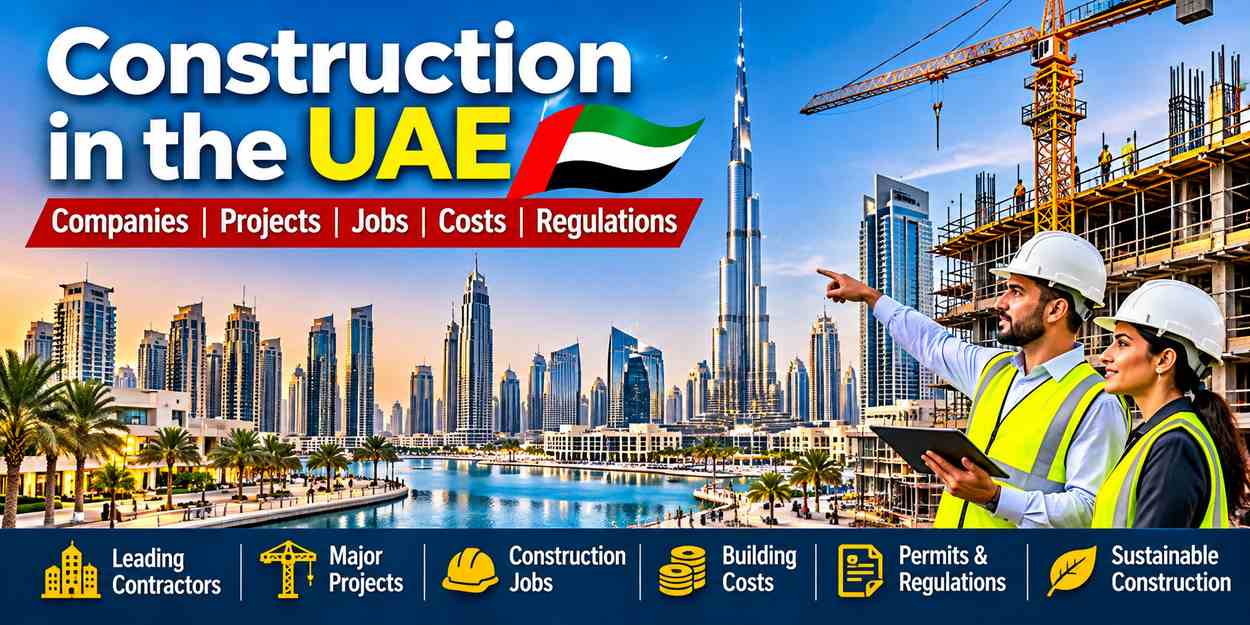
Construction in the UAE
Explore construction in the United Arab Emirates (UAE), including Dubai, Abu Dhabi and the other emirates. This country hub introduces leading construction sectors, infrastructure, contractors, building permits, project costs, construction jobs and practical industry questions.
Visit our International Construction Hub for other countries, or explore the UAE topics below. This page is designed as a starting point for contractors, suppliers, jobseekers and researchers, not as a substitute for local professional advice.
Explore UAE Construction Topics
- UAE Construction Industry Overview
- Construction Companies and Contractors
- Dubai Construction and Development
- Abu Dhabi Construction and Infrastructure
- Construction in the Other Emirates
- Major Infrastructure and Engineering Projects
- Building Permits, Codes and Regulations
- Construction Costs and Estimating
- Construction Jobs and Careers
- Procurement, Safety and Sustainability
- Technology, Materials and Specialist Trades
UAE Construction Industry Overview
Construction in the United Arab Emirates spans residential towers, hotels, offices, industrial facilities, logistics centres, transport networks, utilities and energy infrastructure. Dubai and Abu Dhabi are major markets, but Sharjah, Ajman, Ras Al Khaimah, Fujairah and Umm Al Quwain also have distinct development needs. Project activity depends on financing, approvals, demand and procurement conditions; announcements should not be confused with projects already under construction.
Construction Companies and Contractors
The UAE market includes large main contractors, engineering-procurement-construction (EPC) businesses, developers, specialist subcontractors and consultants. Firms may focus on high-rise buildings, civil works, marine engineering, mechanical and electrical services, fit-outs or industrial infrastructure. When comparing companies, examine the exact contracting entity, relevant completed projects, emirate-specific registrations, financial capacity, safety performance and client references. Explore our Top 40 Construction Companies in the UAE (2026 Edition) for contractor profiles, specialisms and company website references.
Dubai Construction and Development
Dubai construction encompasses residential and commercial developments, hospitality, mixed-use districts, transport infrastructure, warehousing and urban upgrades. Different project types require different teams and approval routes. Building projects should be assessed against applicable Dubai Municipality rules, relevant master-developer requirements and other competent authorities, depending on location and project type.
Abu Dhabi Construction and Infrastructure
Abu Dhabi’s construction market includes housing, institutional buildings, roads, public facilities, industrial developments and energy-related projects. Contractors should confirm which Abu Dhabi authorities and development-zone requirements apply. Large infrastructure and industrial programmes may involve separate owner specifications, technical standards and procurement procedures.
Construction in the Other Emirates
Sharjah supports residential, commercial and industrial construction. Ras Al Khaimah has industrial, tourism and real-estate projects; Ajman, Fujairah and Umm Al Quwain have their own local development patterns. Do not assume a permit or contractor classification from Dubai automatically applies elsewhere: the emirate, free zone and site jurisdiction matter.
Major Infrastructure and Engineering Projects
Roads, airports, ports, rail-linked infrastructure, water systems, electricity networks, renewable energy, industrial facilities and urban transport can create demand for engineering and construction services. Project status can change. Verify whether a scheme is proposed, approved, tendered, awarded or actively being built before reporting timelines or budgets.
Building Permits, Codes and Regulations
The UAE does not have one identical permitting route for every building. Requirements depend on the emirate, municipality, free zone, master developer and project classification. Dubai’s building rules and Abu Dhabi’s applicable building codes are important starting points, while civil-defence fire and life-safety requirements, environmental permissions and utility approvals may also apply. Consult the competent authority and qualified local professionals for current requirements.
Construction Costs and Estimating
Costs vary by emirate, location, building height, specification, ground conditions, mechanical systems, labour, imported materials, logistics and programme risk. Compare estimates in UAE dirhams (AED), using a consistent area basis and scope. Separate foundations, structure, façade, fit-out, mechanical and electrical systems, professional fees, permits, contingencies and taxes. Our construction calculators can assist with basic quantities, but local specifications, measurement units and prices must be checked.
Construction Jobs and Careers
Construction roles include civil engineers, quantity surveyors, architects, planning engineers, project managers, HSE professionals, electricians, welders, heavy-equipment operators and skilled trades. Jobseekers should check employer identity, qualifications, visa and work-permit arrangements, employment terms and current UAE labour requirements. This hub will expand with evergreen career guides rather than presenting expired vacancies as active opportunities.
Procurement, Safety and Sustainability
Project delivery involves tender qualification, contract terms, insurance, quality assurance, worker welfare, site safety and compliance with applicable labour and environmental rules. Sustainable construction may involve energy-efficient façades, water management, low-carbon materials, waste reduction and building-performance certification. Specific standards depend on the emirate, project owner and building type.
Technology, Materials and Specialist Trades
Building information modelling, digital project controls, prefabrication, modular systems and advanced façade engineering can help deliver complex buildings and infrastructure. The UAE climate places particular importance on heat management, cooling efficiency, material durability and site safety. Technology should be chosen based on measurable project benefits and local approval requirements.
Upcoming UAE Construction Resources
- Top 40 Construction Companies in the UAE (2026 Edition) — published: company profiles, sector specialisms, comparison table and company website references.
- 20 UAE construction jobs and careers guides: occupations, skills, qualifications and employment considerations (planned).
- 20 UAE construction Q&As: practical answers on costs, approvals, materials and building methods (planned).
Frequently Asked Questions About Construction in the UAE
What are the main construction markets in the UAE?
Dubai and Abu Dhabi are major markets, while Sharjah, Ras Al Khaimah and the other emirates have distinct residential, commercial, industrial and infrastructure activity.
Are building regulations the same across all seven emirates?
No. The competent municipality, development authority, free zone and project type can change the approval route and applicable requirements.
How much does construction cost in Dubai?
There is no reliable single figure for every project. Costs depend on building type, height, specification, location, ground conditions and project scope. Obtain local, itemised estimates.
How do I select a UAE construction contractor?
Check the contracting entity, relevant licence and classifications, comparable projects, safety systems, financial capacity, insurance and references.
Where can I find construction jobs in the UAE?
Start with verified employer careers pages and reputable job platforms. Confirm vacancy dates, work-permit arrangements and contract terms before applying.
Does this hub list current construction tenders?
Not yet. Tender and project information should be checked with the relevant issuing authority or owner, as deadlines and award status change.
Editorial note: Building requirements, labour rules, construction costs and project statuses can change. Verify details with the relevant emirate authorities and qualified local professionals before making decisions.