



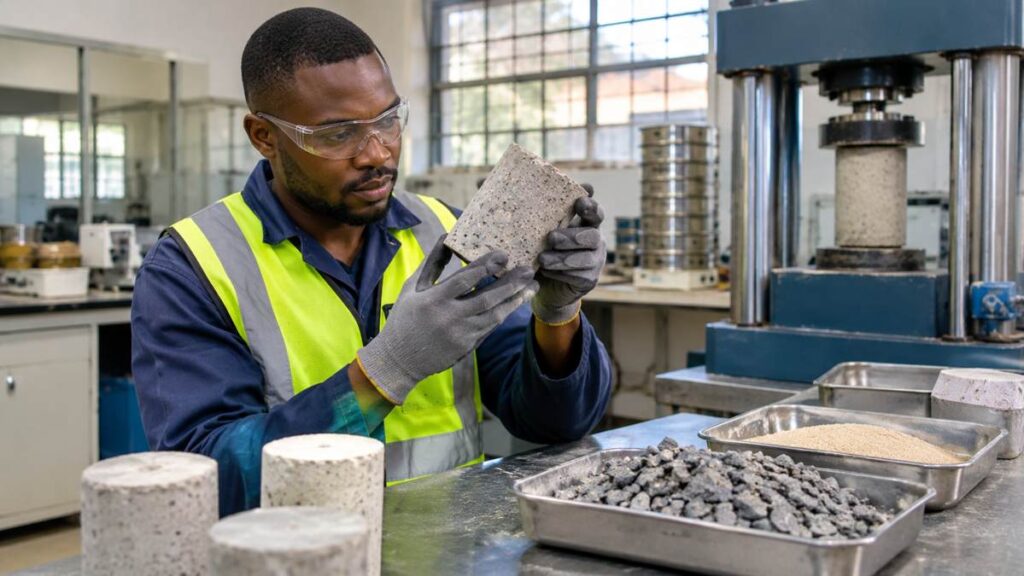
What materials testers do
Construction materials testers help engineers and contractors determine whether soils, aggregates, concrete and other materials meet project specifications. They collect samples, prepare specimens, conduct prescribed tests and record results. Reliable records matter because a failed test may trigger further inspection or remedial work.
Typical work on site and in a laboratory
A tester might visit a road project, label samples, measure moisture or density and prepare concrete specimens under supervision. Tasks depend on training and the laboratory’s scope. Learn how compaction tests work and why base and subbase materials are assessed differently.
Qualifications and training
Entry requirements vary by employer and testing method. Some positions offer supervised training; advanced responsibilities require demonstrated competence. Before paying for a course, compare short courses and occupational qualifications and verify current provider accreditation. Ask which testing standards and quality systems the employer uses.
Skills employers value
Accuracy, mathematics, sample traceability, safety awareness and communication are essential. Never change test results to match a target. A good construction CV should name the actual methods, equipment and projects on which you have experience. Do not claim professional registration or authorisation you do not hold.
Career progression
Experienced testers may move into senior technician, laboratory coordination or quality-control roles with suitable training. Professional registration, where applicable, has separate requirements. Ask prospective employers about travel, shift patterns, protective equipment and supervision. Pay varies by location and employer; this article does not invent a salary range.
How to gain experience
Look for laboratories and contractors offering structured practical exposure. Keep a record of the tests you have performed and the supervisors who can verify your work, without disclosing confidential client information. Demonstrated care with documentation and sample handling can be as valuable as familiarity with equipment. This is a careers guide, not a vacancy advertisement.
