



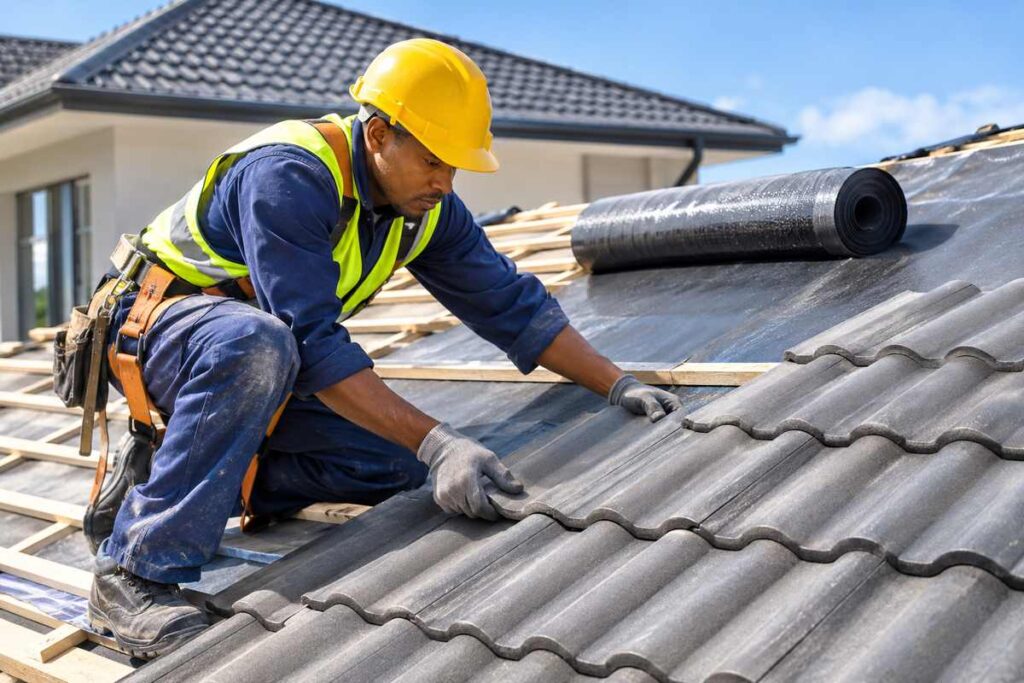
A leaking roof can sometimes be temporarily managed from inside, but a lasting repair usually requires identifying and correcting the actual water entry point in the roof system. Internal patching may hide symptoms or redirect water without stopping the leak. The appropriate repair depends on whether the moisture comes from rain penetration, condensation, plumbing or another source.
Why the visible drip may not be the leak location
Water can travel along rafters, battens, underlay, pipes or ceiling surfaces before dripping into a room. A stain beneath a chimney may originate higher up the roof or from defective flashing at a nearby junction. Wind-driven rain can also enter through defects that remain dry during light rainfall. Record the timing, location and weather conditions associated with the leak to help a specialist trace the source.
What you can safely do indoors
Move belongings away from the affected area if it is safe to do so and contain minor drips without standing beneath damaged ceilings. Keep people away from bulging, sagging or saturated ceiling materials because they may collapse. Water near electrical fittings presents a serious hazard; avoid touching wet switches or equipment and arrange qualified electrical assistance. Do not enter a roof void with unsafe access, exposed wiring or damaged structural elements.
Why internal sealants often fail
Applying sealant beneath a roof sheet or tile may not stop water entering from above. Moisture can remain trapped within the assembly, damage timber or insulation, or find another path into the building. A durable repair may require replacing damaged coverings, correcting flashing, repairing a membrane or restoring drainage. Use compatible materials and the manufacturer’s approved repair procedure.
Practical example: a leak during heavy rain
A homeowner notices a ceiling stain near a roof valley during storms. The roofer inspects the valley lining, surrounding tiles, underlay and downstream gutter. Debris restricting the valley discharge is identified alongside a damaged junction. Cleaning alone may not repair the junction, while an internal patch would not restore drainage. The repair addresses both defects and the affected internal materials are assessed after the moisture source is resolved.
Use the building materials cost calculator for preliminary repair budgeting, but obtain a quotation covering diagnosis, safe access and labour. Consult the SABS for relevant roof standards and the covering manufacturer’s repair guidance. Find roofing and waterproofing specialists for inspection. Never climb onto wet, fragile or storm-damaged roofing to attempt an emergency repair.
Frequently asked questions
It may temporarily change the drip, but usually does not correct the external entry point.
No, where access or electrical and structural conditions are unsafe. Arrange professional inspection.
Yes. Investigate moisture sources before choosing a repair.
Related construction questions
Have More Construction Questions?
Explore our South African construction knowledge hub for practical answers about building materials, costs, regulations, construction methods and more.
Browse All Construction Questions