



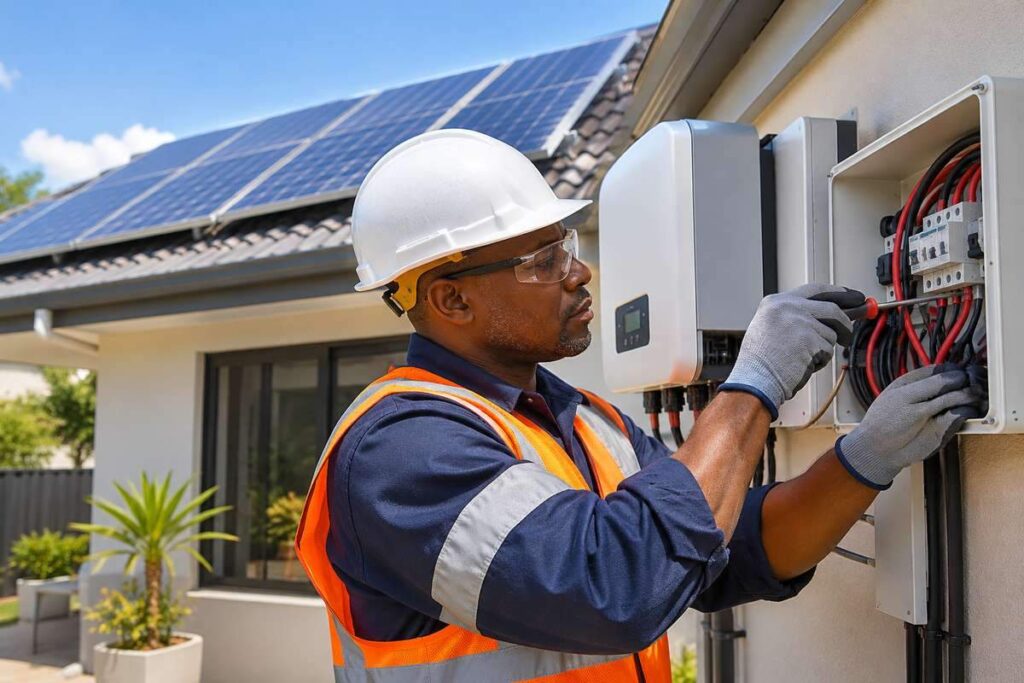
How much does a solar panel installer earn in South Africa? Earnings depend on experience, qualifications, employer, location and responsibilities. The following November 2026 guide uses indicative gross monthly planning ranges, not guaranteed salaries.
Indicative monthly earnings by career stage
| Career stage | Indicative gross monthly amount |
|---|---|
| Installation assistant or junior | R7,000–R14,000 |
| Experienced PV installer | R14,000–R23,000 |
| Senior installer or team lead | R23,000–R30,000 |
| Qualified electrical specialist | R25,000–R38,000 |
These ranges overlap because job titles and experience requirements differ. Apprenticeship allowances, where shown, are not qualified artisan salaries. Check applicable wage agreements and legal minimums for the actual employment arrangement.
Evidence and methodology
Indeed’s national solar installer benchmark was R13,269 monthly base pay on 22 September 2026, from only nine reports, with a displayed range of roughly R6,550–R26,900. An October 2026 renewable recruitment guide describes entry installer and technician packages around R15,000 CTC, not necessarily basic salary. CareerJunction electrician benchmarks provide context for the separate qualified electrical specialist category. The bands are rounded planning estimates; solar-specific experience data is weak, especially at senior level. The ranges are not official pay scales. Base salary, gross cash earnings and cost-to-company packages are different measures; CTC evidence is used only as context, not treated as equivalent to basic salary.
What influences earnings?
Rooftop mounting, commissioning, battery systems, electrical registration and remote solar farm assignments have different pay structures. Travel and rotation allowances may increase a package without increasing basic salary.
Compare employment offers
Ask for the gross basic monthly amount, normal working hours, overtime rules, pension and medical contributions, bonuses and travel arrangements. Take-home pay depends on tax and deductions. Compare permanent and contract offers over a full year, accounting for unpaid periods and benefits.
How to improve earning potential
Use supervised training rigs to learn module layout, mounting and documentation. PV modules can generate hazardous voltage in daylight; do not treat switching off an inverter as proof that every circuit is safe. Seek assignments that develop demonstrable competence and responsibility, and maintain evidence of achievements. Additional qualifications can improve eligibility for specialist roles but do not guarantee a raise.
Salary sources
Salary disclaimer: These indicative estimates are for general career information. Actual earnings vary by employer, experience, qualifications, location, industry and employment conditions. Overtime, bonuses, allowances and benefits may affect total remuneration. Figures are not guaranteed salaries or employment offers.
Frequently asked questions
What can a beginner expect?
The entry band above is R7,000–R14,000 per month, subject to the actual appointment.
What can experienced workers earn?
The upper career band shown is R25,000–R38,000, but individual offers vary.
Are these take-home amounts?
No, they are indicative gross amounts before deductions.
Does extra training guarantee higher pay?
No, remuneration depends on the employer and demonstrated competence.
