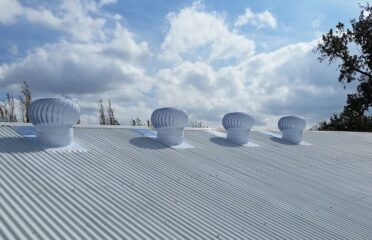
Roofing Ventilation in South Africa
Roof ventilation helps manage heat and moisture within suitable roof spaces and assemblies. Products include ridge vents, eaves vents, static ventilators and mechanical extraction systems. The appropriate arrangement depends on roof construction, climate, insulation, moisture sources and the building’s ventilation strategy. Adding isolated vents does not necessarily establish effective airflow.
Choosing a Supplier or Specialist
Describe the roof type, ceiling arrangement, insulation and existing ventilation openings. Ask about required airflow paths, inlet and outlet locations, weather protection and compatibility with the roof covering. Assess condensation problems before selecting equipment, since air leakage or moisture sources may also need attention. Confirm flashing details, insect screening and maintenance access. Mechanical systems require suitable power and controls.
Explore related roofing systems businesses for complementary products and services. Compare written quotations on the same specification, including delivery, installation where applicable, warranty terms and after-sales support. Ask for a clear breakdown of exclusions before accepting an offer. Confirm lead times and the procedure for reporting problems. Keep the agreed specifications and service documentation for future maintenance or replacement.
Find businesses across Gauteng, Western Cape, Eastern Cape, KwaZulu-Natal, Free State, Limpopo, Mpumalanga, North West and Northern Cape. Confirm availability and service coverage directly with each provider.
Frequently Asked Questions
Does every roof need the same ventilation?
No. Requirements depend on the complete roof design and moisture strategy.
Can roof vents reduce indoor heat?
They may reduce roof space heat accumulation, but results depend on building design.
Do turbine ventilators require electricity?
Many wind-driven models do not, while powered systems require electricity.
Can ventilation prevent all condensation?
No. Insulation, air leakage and moisture management also influence condensation.

 21 Prince Street, Durban, 4001...