Safety Barriers in South Africa
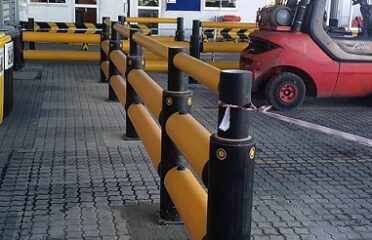
Safety barriers separate people from hazards such as moving vehicles, machinery, excavations and restricted work areas. Products range from temporary pedestrian barriers to fixed industrial guardrails and engineered protective systems. Selection depends on the hazard, expected loads, traffic patterns and the required level of protection.
Choosing a Supplier or Specialist
Identify the hazard and the people or equipment that must be separated. Ask about barrier height, anchoring, visibility and documented performance for the intended application. Distinguish pedestrian guidance barriers from vehicle impact protection and edge protection systems. Coordinate access openings, emergency routes and maintenance requirements. Temporary barriers should remain stable and visible under expected site conditions. Confirm inspection and replacement procedures.
Explore related security barriers businesses for complementary products and services. Compare written quotations on the same specification, including delivery, installation where applicable, warranty terms and after-sales support. Ask for a clear breakdown of exclusions before accepting an offer. Confirm lead times and the procedure for reporting problems. Keep the agreed specifications and service documentation for future maintenance or replacement.
Find businesses across Gauteng, Western Cape, Eastern Cape, KwaZulu-Natal, Free State, Limpopo, Mpumalanga, North West and Northern Cape. Confirm availability and service coverage directly with each provider.
Frequently Asked Questions
Can pedestrian barriers stop vehicles?
Ordinary pedestrian barriers are not necessarily designed for vehicle impact.
Are temporary barriers suitable for excavations?
Only where the system meets the required protection and site conditions.
Do fixed barriers need anchoring?
Usually, according to their design and supporting construction.
Can barriers replace traffic management?
No. They should form part of a coordinated risk control plan.

 34 Condor Road Douglasdale Sandton 2191 Gauteng South Africa
 21 Prince Street, Durban, 4001...